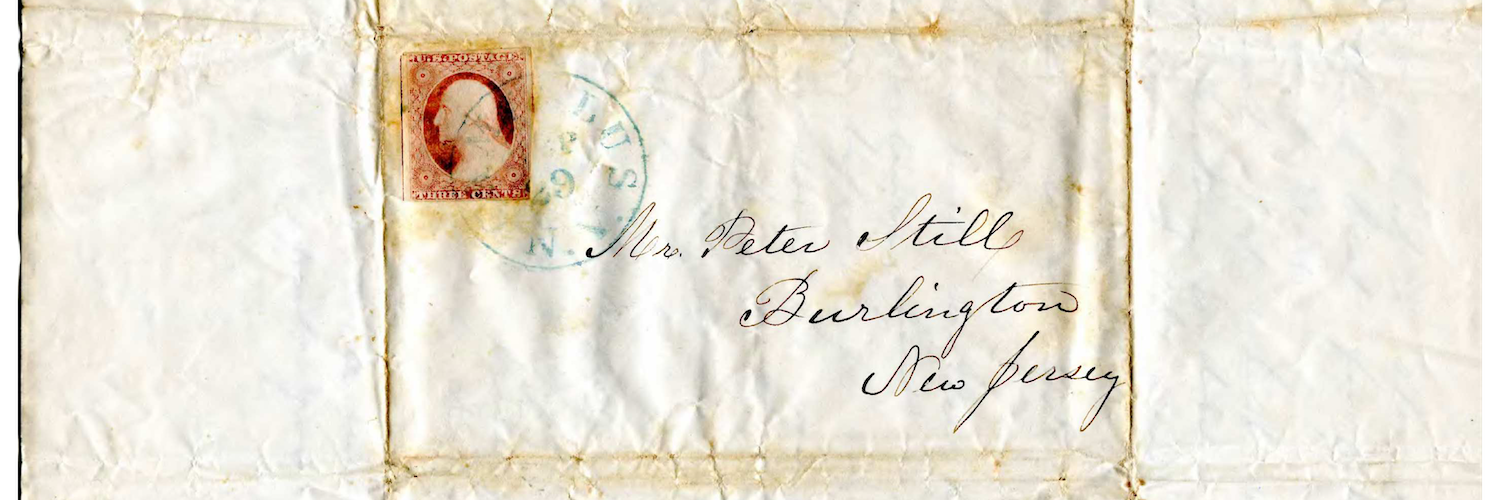
Peter Still Edition
The Peter Still Digital Edition (57 items) is chiefly composed of correspondence (1850-1875) relating to Still’s efforts to raise funds to purchase his wife, Vina Still, and their three children, Peter Jr., Levin, and Catharine, all still enslaved in Alabama. By 1850, the date of the first document in this collection, Peter Still had secured his own freedom at nearly 50 years of age with the cooperation of Joseph and Isaac Friedman of Tuscumbia, Alabama. A secondary subject of the letters concerns Kate E. R. Pickard’s work on a biography of Still, The Kidnapped and the Ransomed: The narrative of Peter and Vina Still after forty years of slavery, published in 1856.

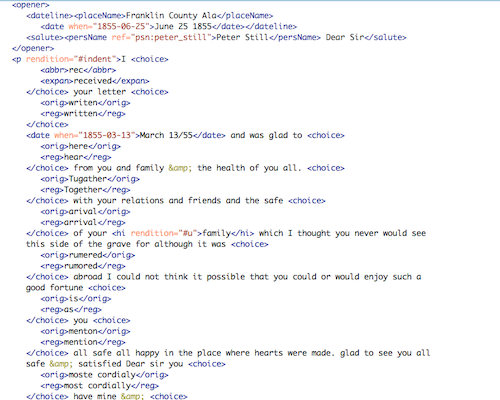
The collection includes sixteen letters of introduction, secured by Still as a means of presenting himself to those sympathetic to the antislavery cause and to assist him in his fundraising. Letters from some prominent abolitionists are present, such as William Lloyd Garrison, Horace Greeley, and Harriet Beecher Stowe.
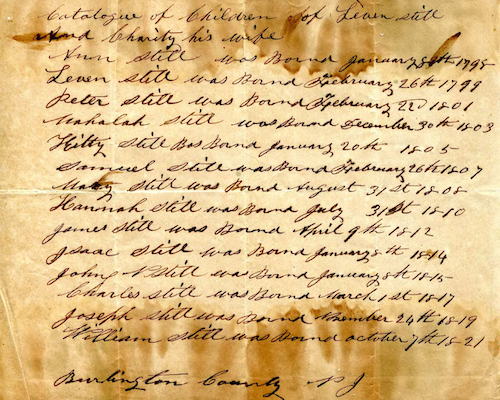
In addition, there is a memo book, in which Still had recorded his travel expenses, and the names and addresses of his donors together with the sums they contributed towards his mission. A family record, by an unknown hand, records the births of fourteen children to Levin Sr. and Charity Still from 1798 to 1821.
In 2025-2026, we added 26 additional letters (1871-1889) from the Correspondence and Personal Papers series of the Leon Gardiner collection of American Negro Historical Society records to the edition. These letters were added primarily to address gaps in information about Still family members and to show a more mature William Still in command of several businesses and with a new book to sell: The Underground Rail Road (1872). Many of these letters were transcribed from the tissue sheets of William Still’s letter press book. Some of the copies are quite legible while others have issues of bleed through or dimness. These letters are offered with transcriptions only; images have been omitted to comply with the Historical Society’s reproductions policy.